


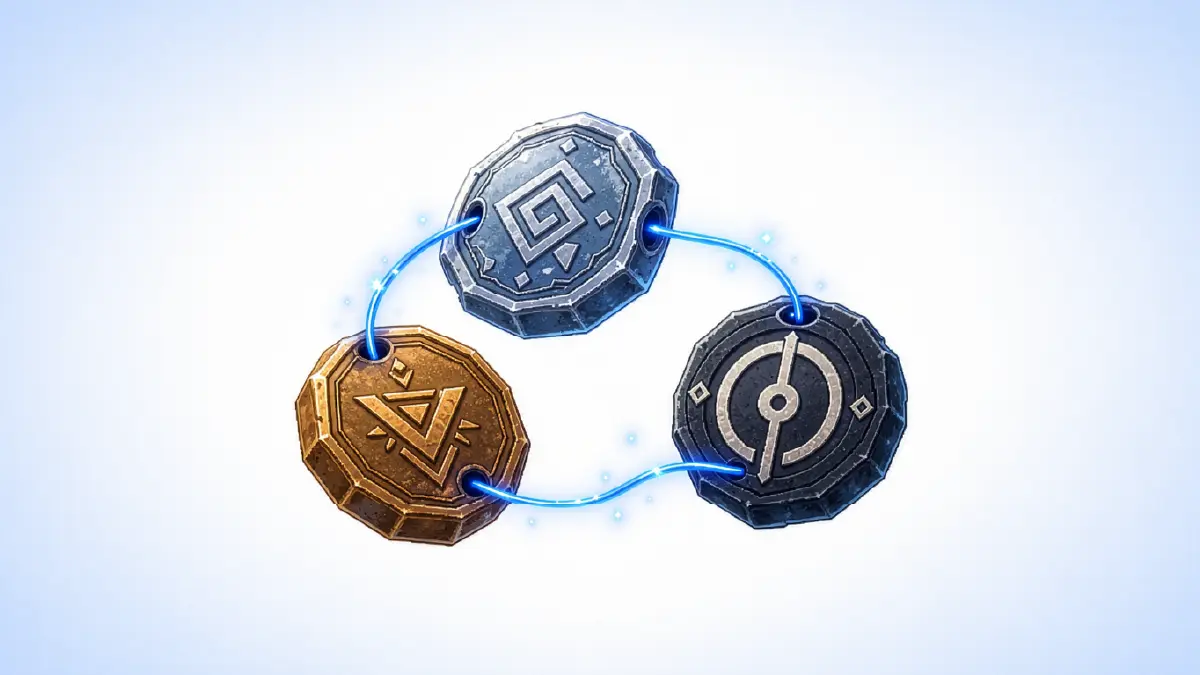
"Cross-platform play" gets used as if it's one feature you switch on. It isn't. It's at least four separate problems wearing one label:
-
linking a player's accounts across stores
-
letting their progression follow them
-
reconciling purchases so an item bought on one platform shows up on another
-
and matching players from different platforms into the same session.
A backend can be excellent at one of these and useless at another, so "which backend is best for cross-platform play" has no single answer, only a set of answers depending on which of those four problems is actually hard for your game. So this is a map, not a ranking.
Below are ten backends sorted by which part of cross-platform play each one is best at, with the facts laid out so you can match them to the specific thing you're trying to solve. Some will be wrong for your game. The point is to make it obvious which, and why.
We cover AccelByte Public Cloud, AccelByte Private Cloud, PlayFab, Unity Gaming Services, Metaplay, Pragma, Heroic Labs (Nakama), Beamable, LootLocker, and Epic Online Services.
AccelByte builds one of these, and we'll say where it fits and where it doesn't. Public Cloud and Private Cloud are the same platform on cross-platform capability; they differ on deployment, pricing, and compliance, so they're separate rows in the pricing tables and a single row in the capability tables. If you want the wider decision framework, the full backend roundup and the five questions that decide a backend choice are the companion pieces; if cross-progression specifically is your problem, the breakdown of cloud save across engines and platforms goes deeper than this page can.
Short version, if you need it fast: account linking is close to a commodity, so don't pick on that alone. For console cross-play, AccelByte, PlayFab, and Pragma lead on native console identity. For cross-progression, AccelByte and PlayFab, with EOS a strong free option. For cross-platform commerce that grants everywhere, AccelByte, with PlayFab close. For cross-play plus real-time dedicated servers, AccelByte, with Heroic Labs close via a partner. For a small team, the fastest path is LootLocker, Beamable, or free EOS, though a serious team planning to scale should look at AccelByte or Heroic. And for free cross-play identity and social to pair with a real backend, EOS is hard to beat. The rest of the page explains why.
A note on fairness before the tables. Cross-platform feature sets drift, and several of these platforms price by quote rather than a public rate card. Where a vendor publishes real numbers, we've used them; where they don't, we say so rather than guess. Verify anything load-bearing against the vendor's current docs before you commit.
The four problems hiding inside "cross-platform play." A backend can lead one and trail another, so scope your decision to the one that is actually hard for your game.
The Comparison at a Glance
Read this for the broad strokes: who links accounts across console, whose progression genuinely follows the player, who reconciles purchases everywhere, and who can put cross-platform players on the same real-time server. The segments below carry the reasoning.
Pricing Snapshot
Cross-platform play itself rarely carries a separate price; it rides on each platform's base pricing model, and the model is what decides whether your bill stays survivable as cross-platform players pile in. Several vendors price by quote; those are marked, not guessed.
Best for Account Linking: Nearly Everyone
Account linking is the base layer of cross-platform play: tying a player's Steam, PSN, Xbox, and mobile logins to one identity so the game knows they're the same person everywhere. It's also the sub-case where the comparison matters least, because almost every backend here does it. If you're choosing a platform on "does it support account linking," you're comparing on a commodity.
Nine of the ten platforms on this page link accounts natively; the only caveat is Beamable, whose federated OAuth linking is documented but whose console linking isn't confirmed in its own docs. So the honest guidance for this sub-case is to stop comparing on it and move to the questions that actually separate these platforms: how far the linking reaches (console, covered next), and what rides on top of it (progression and commerce, covered after).
The real failure mode isn't a platform that can't link accounts; it's picking a platform whose linking stops at PC and mobile when your game is heading to console, or whose identity can't carry the commerce and progression you'll need later. Linking is necessary, not sufficient, and it's the wrong axis to decide on.
Best for Console Cross-Play: AccelByte, PlayFab, or Pragma
Console is where cross-platform play gets genuinely hard, and where most of the field falls away. PlayStation, Xbox, and Switch each bring their own account system, certification rules, and store, and "native console identity", full identity and linking on console, not just a login, is something most backend-as-a-service platforms don't have. If your game ships on console and needs cross-play with PC or mobile, this is the filter that matters most.
-
AccelByte has native identity and linking across PSN, Xbox, Switch, and Steam, with cross-platform matchmaking that auto-syncs session and party information to whichever platform the player is currently on.
-
PlayFab matches it on console identity and linking, backed by the heaviest console track record on this page (Minecraft, Forza Horizon 5), with Azure as the substrate.
-
Pragma is the third and an underrated one for this specific need: it documents native identity across seven providers, so on console reach it's a real peer, even though its source-fork model puts it in a different category on how you'd build.
The Unity-native platforms are the honest "no" here:
-
Unity Gaming Services has no native console identity (console comes through separate setup work), and Metaplay and Beamable are Unity-first without native console identity.
-
EOS is the interesting edge case, its Connect interface genuinely does reach console and links everything to one Epic ID, so for identity and social specifically it belongs with the leaders; it just isn't a full backend once commerce enters.
Best for Cross-Progression: AccelByte or PlayFab
Cross-progression is the promise that a player's stuff, their level, unlocks, stats, and saves, follows them from one platform to another. It sounds like a storage feature and isn't: the hard part is that platform cloud saves are keyed per Title ID on each store, so genuinely portable progression has to live on the backend, keyed to a cross-platform identity, with server-authoritative writes for anything that affects fairness (rank, currency balances). Get the identity layer wrong and "cross-progression" quietly becomes per-platform saves that don't talk to each other.
AccelByte and PlayFab are the two most complete answers.
AccelByte stores progression on Cloud Save and Stats keyed to its own cross-platform identity, with server-authoritative logic so rank and unlocks stay consistent across platforms and game modes, and it's explicitly built to handle cross-gen and even cross-title progression, not just cross-platform. PlayFab is an equal peer here, with mature player-data and entity objects plus economy-backed entitlements, on Azure.
EOS deserves real credit in this sub-case and is the strongest free option: Player Data Storage, Title Storage, Stats, and Achievements all sync to one Epic identity, so a team that only needs cross-progression (not commerce) can get it at no cost. Unity Gaming Services can do cross-progression through Cloud Save, but only if you've done the account-linking work underneath; its own default identity is device-bound, which is exactly the thing that doesn't travel, so the save follows the device unless you make it follow the human. Metaplay's shared-C# model gives strong cross-device progression on mobile and PC but not console cross-play. Nakama stores it cleanly if you build on its storage and stats primitives.
Best for Cross-Platform Commerce: AccelByte
Cross-platform commerce is the sub-case with the least room for error, because a mistake here either double-charges a player or hands out an item nobody paid for. The specific hard problem: a purchase made in the PlayStation store has to grant the same entitlement to that player on Xbox, PC, and mobile, which means reconciling each platform's storefront and receipts against one wallet and one entitlement ledger. Most backends can take a payment; far fewer reconcile it correctly across every storefront a cross-platform game touches.
AccelByte is the most complete answer here, with a Virtual Wallet and Entitlement Sync built specifically to reconcile and fulfill purchases from platform stores and grant them across platforms, including console storefronts.
PlayFab is a genuine peer with Economy v2 (currencies, items, bundles, stores, inventory) and strong storefront integration, on Azure. The Unity-native platforms handle economy well within their own model, Metaplay's server-authoritative offers, Beamable's managed economy, but reconciling console storefronts is where the Unity-first platforms are weaker, since native console identity is the gap from earlier. LootLocker has a real in-game store and economy aimed at indies, but its console support is authentication-only, so console purchase reconciliation is a gap if console is central to your monetization. EOS is the clear floor for this sub-case specifically: its Ecom is tied to Epic Games Store ownership, not general cross-platform commerce, so a monetized cross-platform game needs its commerce layer elsewhere. This is the single biggest reason EOS is a "plus-one" rather than a complete backend, and it's covered in the placement below.
Best for Cross-Play + Real-Time Dedicated Servers: AccelByte
Plenty of cross-platform games are turn-based, asynchronous, or social, and don't need this at all. But if your cross-platform game is also real-time and competitive, a shooter, a fighting game, a battle royale where cross-platform players share one live match, then cross-play and dedicated servers stop being two separate questions. You need one platform that both unifies identity across platforms and puts those players on an authoritative dedicated server, and that intersection is narrow.
AccelByte is the only platform on this page that owns both halves first-party: cross-platform identity and matchmaking on one side, and AccelByte Multiplayer Servers (AMS), a first-party dedicated-server orchestrator with hybrid bare-metal and cloud hosting, on the other, with matchmaking feeding server allocation directly.
Heroic Labs is the credible runner-up: Nakama has an authoritative match runtime and native cross-platform identity, but it routes dedicated-server orchestration to a partner (Edgegap or GameLift) rather than running it first-party. PlayFab has both pieces too, but its servers run exclusively on Azure. Everyone else is missing the server half for real-time: Unity concluded direct support for its Multiplay hosting in March 2026; Metaplay's matchmaker is asynchronous and expects you to add a netcode layer; Beamable is relay-only and routes real-time to Nitrado; LootLocker has no matchmaking or servers; and EOS gives you peer-to-peer and sessions but no orchestrated dedicated fleet. If a cheating or lagging cross-platform player ruining a live match is your failure mode, this sub-case should dominate your decision.
Best for Indie and Small-Teams: LootLocker, Beamable, or Free EOS, with AccelByte for Scale
There are two different questions inside "cross-platform for a small team," and they resolve differently. If the goal is the fastest path to working cross-platform features on PC and mobile for a prototype or a small launch, the lightweight options win. LootLocker is low-code with a free non-commercial tier and cross-platform player accounts ready to switch on; Beamable gives a Unity-native team hosted logic without running servers; and EOS is genuinely free and covers cross-platform identity, social, and progression out of the box, which for a lot of small cross-platform games is most of what they need on day one.
But "small team" and "small ambitions" aren't the same, and for a serious indie team heading to console or planning to scale, AccelByte is a stronger fit than its enterprise reputation suggests. It's free forever during development up to 30 peak concurrent players a day, GDPR and CCPA compliant out of the box, and its PCCU model favors small games: AccelByte's own breakdown of studios that assumed it wasn't for them puts real numbers on it, roughly $52 a month at 100 peak concurrent players and about $350 at 500. Concrete indie evidence backs it: Genun Games built the racing-shooter hybrid Ascent Rivals on it, and FuzzyBot shipped the co-op action RPG Lynked: Banner of Spark on the same platform.
Heroic Labs is the other credible pick for this tier, self-hosted Nakama is free and gives you room to grow into managed hosting later. The dividing line isn't team size; it's whether you're heading somewhere that needs console identity and real servers, because that's the point where the lightweight tools stop and a full platform earns its place even for a small team.
Where Epic Online Services Fits
EOS earned mentions in almost every segment above, and it needs its own placement because it's the most misunderstood option on this page for cross-platform play specifically.
On the plumbing of cross-play, identity, account linking to one Epic ID, cross-platform social with the Social Overlay, and cross-progression through Player Data and Title Storage, it's genuinely excellent and completely free, backed by an ecosystem of nearly a billion players and used across PC, PlayStation, Xbox, and Switch. For a team that needs cross-platform identity, friends, and progression and nothing more, it's hard to argue with.
The right way to think about EOS for most cross-platform games isn't EOS-versus-a-real-backend; it's EOS-plus-one. It has no full cross-platform commerce (its Ecom is tied to the Epic Games Store), no first-party dedicated servers, and no LiveOps tooling, so a monetized, server-based cross-platform game pairs EOS's free identity and social layer with a backend that covers commerce, servers, and progression at scale, rather than choosing between them. The one thing to weigh deliberately is data sovereignty: EOS is operated by Epic, which runs the Epic Games Store and competes in the market your player data touches. For many teams that's a non-issue and free wins; for others it's a real consideration.
So Which One Is Best for Cross-Platform Play?
It depends on which of the four problems is actually hard for your game, which is the whole reason this page is a map. Account linking is a commodity; don't decide on it.
-
For console cross-play, AccelByte, PlayFab, and Pragma lead on native console identity.
-
For cross-progression, AccelByte and PlayFab, with EOS as the best free option.
-
For cross-platform commerce, AccelByte, with PlayFab close behind.
-
For cross-play plus real-time dedicated servers, AccelByte is the only first-party answer, with Heroic Labs close via a partner.
-
For a small team, start fast with LootLocker, Beamable, or free EOS, and look hard at AccelByte if you're heading to console or planning to scale.
-
And for a free identity and social layer to pair with a real backend, EOS is hard to beat.
Figure out which of those four problems is yours, and the ten options collapse to two or three worth a serious trial. Pick those, then build a vertical slice of your actual cross-platform flow on each. That's the test that answers this properly, not a ranking.
Get Started with AccelByte for Free
If cross-platform play is your problem, whether it's console cross-play, cross-progression, commerce that grants everywhere, or putting cross-platform players on the same real-time server, you can try AccelByte without a sales call. AccelByte Gaming Services is free on public cloud until your game hits 30 CCU, with full access to the platform and every cross-platform feature, the same infrastructure behind shipped cross-platform titles. Spin it up and build a real cross-platform flow against it now, or talk to us if you'd rather map your platform mix first.
You're almost signed up!
Verify your account by following the instructions sent to .
If you still haven't received an email, please check your spam folder.
FAQ
There's no single best backend for cross-platform play, because it's really four problems: account linking, cross-progression, cross-platform commerce, and cross-platform real-time play. Account linking is near-universal, so decide on the rest. AccelByte and PlayFab are the most complete across all four, with native console identity; EOS is the best free option for identity, social, and progression but lacks commerce and dedicated servers; and Unity-native platforms like Metaplay and Beamable are strong on mobile and PC but weaker on console. Match the platform to the specific part of cross-platform play that's hard for your game.
Cross-progression depends on storing player data against a cross-platform identity rather than a device or a single store. AccelByte (Cloud Save plus Stats, server-authoritative, cross-gen capable) and PlayFab (player data plus economy) are the most complete. EOS is the strongest free option, with Player Data Storage, Title Storage, and Stats synced to one Epic identity. Unity Gaming Services can do it through Cloud Save, but only if you link accounts underneath, since its default identity is device-bound.
Native console identity, full identity and linking on PlayStation, Xbox, and Switch, is the filter, and most backend-as-a-service platforms don't have it. AccelByte, PlayFab, and Pragma all do, and EOS reaches console for identity and social. Unity Gaming Services, Metaplay, Beamable, and LootLocker do not have native console identity (LootLocker is authentication-only on console).
Cross-platform commerce means a purchase on one store grants the entitlement everywhere, which requires reconciling each platform's storefront against one wallet. AccelByte (Virtual Wallet plus Entitlement Sync, including console storefronts) and PlayFab (Economy v2) are the most complete. EOS cannot do this: its Ecom is tied to the Epic Games Store, so a monetized cross-platform game needs its commerce layer elsewhere.
For identity, social, and cross-progression, EOS is excellent and free. It is not a full backend: no cross-platform commerce beyond Epic Games Store ownership, no first-party dedicated servers, no LiveOps. The common pattern is EOS-plus-one, EOS's free identity and social layer paired with a backend that handles commerce, servers, and progression at scale. Also weigh data sovereignty, since Epic operates both EOS and a competing storefront.
Yes. EOS is entirely free for cross-platform identity, social, sessions, and progression. Self-hosted Nakama is free and open source. AccelByte's public cloud is free up to 30 concurrent players, and LootLocker and Beamable have free development tiers. The catch is usually at the edges (commerce, dedicated servers, console reconciliation), so confirm the specific cross-platform feature you need is covered on the free tier before committing.
Cross-platform play rarely has its own line item; it rides on each platform's base pricing model. Those models are peak-concurrent-user (AccelByte, free to 30 PCCU/day), consumption metering (PlayFab from $99/month, Unity Gaming Services), per-DAU tiers (Metaplay from €195/month, Pragma from $1,499/month), subscription plus usage (Beamable from $125/month), free open-source self-hosting or managed usage-based (Nakama), and free (EOS). The model matters more than the entry price, because it decides whether your bill stays predictable as cross-platform players grow.
Featured Blog Posts


Bring your first player online today.
Get started for free, and scale as your game grows.