


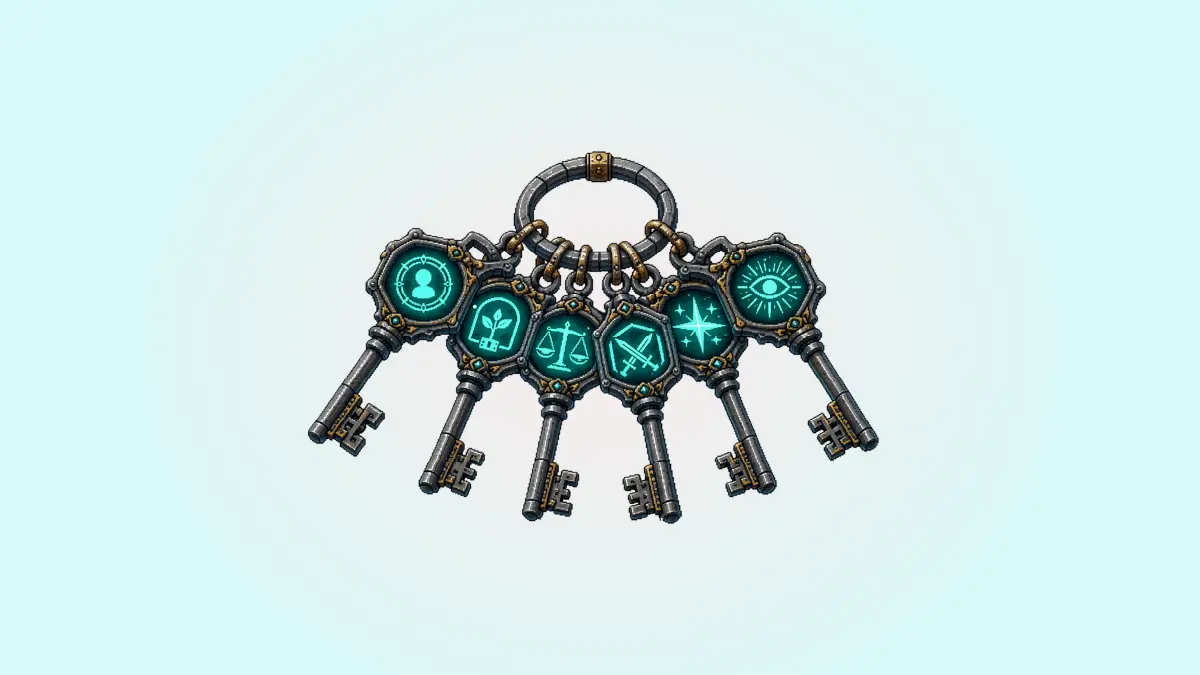
Most developers don't decide to build a game backend. They back into one.
It usually goes like this. You're building a single-player game, so you're pretty sure you don't need a backend at all. Then you want a leaderboard, so you add a little service to store scores. Then players want their progress on their phone and their PC, so you bolt on cloud saves. Then someone posts a leaderboard time that's physically impossible, so now you need to validate scores on a server instead of trusting the client. Then you ship on a second platform and realize a player's account on Steam has nothing to do with their account on PlayStation, and you need some way to tie those together. None of these felt like "building a backend" at the time. Each one felt like a small feature. Added up, you built a backend anyway, in pieces, under deadline, without ever designing it.
The bigger the game, the more expensive that accident gets. A solo developer ends up with a few fragile services. A studio shipping a multiplayer title ends up with a distributed system it has to keep alive during launch week, which is the worst possible time to discover which parts don't hold up.
So it's worth understanding what a game backend actually is before you're halfway through building one by accident. This holds whether you're a solo developer who thinks the term doesn't apply to you, a mid-size studio scoping your first live-service title, or an established team deciding how much of this to own versus adopt. The backend is a real, definable thing with a real, definable job.
Let's get specific about it.
The Definition, in Terms of What It's Responsible For
A game backend is the server-side half of your game. Not the graphics, not the input handling, not the physics your player sees and feels. The half that runs on machines you control and owns the things the player's device can't be trusted to own on its own.
Concretely, a backend is responsible for four things:
-
Knowing who a player is, consistently, across every platform and device they log in from. One human, one identity, whether they're on Steam today and Xbox tomorrow.
-
Owning the player's state as the source of truth. Their progression, inventory, currency, unlocks, and saves live on the server, not just on the device, so they survive a reinstall, sync across devices, and can't be edited by anyone with a hex editor and a free afternoon.
-
Running the logic you can't trust the client to run. Anything a cheater would love to control, awarding currency, validating a match result, granting a rare drop, has to happen somewhere the player can't reach in.
-
Staying up when everyone shows up at once. Launch day, a sale, a streamer spike. The backend is the part that either scales to meet that or falls over in front of your entire player base.
That's the whole job, described in plain terms. Everything else people file under "backend," identity, matchmaking, economy, leaderboards, telemetry, is a specific system that does one of those four things. Keep that framing in mind, because it makes the rest of this much easier to reason about, and it's the thing the buzzword-heavy version of this explanation always leaves out.
What a Game Backend Isn't
The word gets used loosely, and three specific confusions cause the most trouble when you're planning. Worth clearing all three.
It Isn't Just a Database
This is the most common one. "A backend is where you store player data," so people picture a database and figure they've got it covered with Postgres and a REST endpoint.
A database stores records. That's necessary, but it's a component, not the whole thing. The backend is the layer that decides what happens around those records. When two players on different platforms try to join the same match, something has to resolve their identities, check they're allowed to play together, and put them in a session. When a client reports "I finished the level in 4.2 seconds," something has to decide whether that's plausible before it writes to the leaderboard table. When a player buys something, something has to confirm the purchase with the platform store, grant the item, debit the currency, and make sure that whole sequence either completes or rolls back cleanly, even if the connection drops halfway through.
The database holds the state. The backend is the logic, the rules, and the coordination sitting on top of it. Confusing the two is how you end up with a leaderboard full of impossible scores and a store that occasionally charges a player without giving them the item.
It Isn't Your Game Servers or Your Netcode
This one trips up multiplayer developers specifically, because both live "on the server" and both are about players interacting, so they get lumped together.
Your netcode and your dedicated game servers move real-time game state between players. Position, aim, who shot whom, the physics of the match as it happens, tick by tick. That's a latency problem measured in milliseconds, and it's mostly separate from the backend.
The backend is the persistent layer around the match, not the match itself. It's what authenticates the players before the match, matchmakes them into a fair lobby, tracks their rank and stats after the match ends, holds their unlocked cosmetics, and runs the economy they spend in between sessions. A dedicated server hosts the ten-minute firefight. The backend is the reason those ten players were grouped together, the reason their progression persisted afterward, and the reason the same account works whether they queued from Steam or console.
You need both, and they talk to each other, but they solve different problems and scale on different axes. Managing and scaling those dedicated servers is its own discipline, which is why server orchestration (spinning fleets up and down across regions to meet demand) is usually treated as a separate concern from the rest of the backend. A studio that treats "we have dedicated servers" as "we have a backend" is missing most of the picture, usually the identity, progression, and economy half.
It Isn't Only for Multiplayer Games
The assumption that single-player means offline is out of date, and it's the one that costs solo developers the most, because they rule out a backend early and then rebuild fragments of one later.
Look at what "single-player" games actually ship with. Spelunky has daily challenges everyone races on the same seed. XCOM 2 has a global stats page. Plenty of predominantly single-player titles ship companion apps or cloud-synced saves that reach into your game while you're not even playing. None of those are multiplayer, and all of them need a backend to work.
Here's the case that makes it concrete. Say a boss in your single-player game is too hard, and players are bailing at that fight. Without any server-side logic, here's your loop: you dig through telemetry to confirm the problem, you find that one attack is doing far more damage than intended and players are missing the perk that mitigates it, you change the value, you build a patch, and you submit that patch to the platform holders for QA and certification. That's days to weeks of turnaround and real cost, for what amounts to changing one number. Now run the same fix with that value living on the backend instead: you change it server-side, and every player gets the rebalanced fight the next time they load in. No patch, no cert queue, no waiting.
That gap, between shipping a client patch and changing a server value, is most of why single-player games reach for backends. Add cloud saves that follow a player across devices, leaderboards for daily challenges, and the ability to see how players are actually doing so you can tune the game after launch, and the "I'm making a single-player game so this doesn't apply to me" position falls apart. If you want the longer version of this argument, we wrote a whole piece on why single-player games need a backend.
Where It Bites Hardest: Multiplayer and Scale
Single-player is where people underestimate whether they need a backend. Multiplayer is where they underestimate how hard the backend is, and the bill for that comes due all at once.
Take a real example. Splitgate, the free-to-play portal shooter from 1047 Games, had a monolithic backend the studio built in-house. It was feature-rich and did clever things for match quality. Then the July 2021 open beta hit, cross-play across Steam, PlayStation, and Xbox, and the game went from a few thousand concurrent players to over 175,000 in a matter of weeks. The in-house backend couldn't keep up. Players were stuck in queues, unable to log in, invite friends, or start matches during peak hours. At one point the team found a hard ceiling: their setup topped out around 65,000 concurrent players because of a database limit, and no amount of overnight optimization moved it. They delayed the full launch to deal with it. (1047 later moved Splitgate's backend onto a managed platform rather than keep scaling the in-house one.)
That's the multiplayer failure mode in one story. It isn't that the backend didn't work. It worked fine at small scale, right up until the moment success arrived, and then the parts that hadn't been built to scale horizontally became the thing standing between the studio and its biggest week ever. Scaling matchmaking, sessions, and identity to a million concurrent players is a genuinely hard systems problem, and it's not one you want to be solving live while players watch the queue.
This is also where the responsibilities from earlier stop being independent. At scale, identity, matchmaking, sessions, and the economy all have to hold up together and stay consistent with each other, under load, across regions and platforms. Getting one of them to scale is work. Getting all of them to scale in concert is most of what a mature game backend actually is.
Backend Needs Change with Studio Size and Game Type
There's no single answer to "what do I need from a backend," because the honest answer depends on what you're building and how big your team is.
A solo developer or a small team shipping a mostly single-player game with some online touches, cloud saves, a leaderboard, maybe a daily challenge, needs a handful of the responsibilities above and can treat the rest as out of scope. The priority is not spending six months building infrastructure instead of the game.
A mid-size studio launching its first live-service or competitive multiplayer title needs much more of it, and needs it to hold up under a launch spike it can't fully predict. Identity across platforms, matchmaking that stays fair as the population shifts, an economy that survives contact with real money, servers that scale with demand, and the tooling to actually operate the game after launch. This is the stage where "we'll build it ourselves" quietly turns into a second full-time engineering project running alongside the game.
A large or established studio usually has some of this already, and the real questions become different: how much of our existing custom backend do we keep, what do we standardize, and where do we need to do something genuinely unusual that no off-the-shelf system supports. Their concern is less "do we have a backend" and more "which parts are worth owning versus adopting, and how do we not maintain five slightly different versions of cross-platform login across five games."
The systems are the same. How many of them you need on day one, and how hard each one has to work, is what changes.
What's Actually Inside a Backend
If the four responsibilities are the "why," here are the systems that do the work. This is roughly the anatomy of every game backend, whether you build it or adopt one. I'll keep each to what it does and where it gets hard, because the difficulty is the part worth knowing before you decide who owns it.
Identity and accounts. Authenticates players and gives them one identity across every platform. Sounds simple until you ship cross-platform. A player is "AwesomePlayer" on Xbox and something completely different on PlayStation, and your game has to understand those are the same person, link the accounts, and keep one unified record. Getting this right early matters more than almost anything else, because identity is the foundation every other system sits on. Matchmaking, saves, purchases, friends, all of it keys off "who is this player," so if identity is wrong, everything downstream is wrong too. As a concrete example, this is exactly the problem AccelByte's identity and access management is built around: one account record that spans Steam, PSN, Xbox, and the rest, so the rest of the backend has a single player to reason about.
Storage and progression. Holds the player's saves, stats, inventory, and unlocks as the server-side source of truth, synced across their devices. The hard part isn't storing it, it's keeping it consistent when the same player is writing from two devices, or when a connection drops mid-save and you have to avoid corrupting their progress.
Commerce and economy. Runs your in-game store, currencies, and entitlements, and reconciles real-money purchases with each platform's storefront. This is where correctness matters most, because bugs here either cost players money or cost you revenue. A dual-currency economy (a soft currency players earn and a hard currency they buy) has to stay balanced across every storefront you're on, which is genuinely fiddly to design so that adding a new platform later doesn't mean rebuilding it.
Matchmaking and multiplayer services. For connected games, this groups players into sessions and manages parties, lobbies, and the session lifecycle. Matchmaking in particular has two goals that fight each other: put players in fair matches, and don't make them wait. Skill-based rules improve fairness but shrink the pool you can draw from, so at low player counts a strict "fair" match can take longer than anyone will tolerate. That's why real matchmaking rulesets have flex rules, start strict, then loosen the skill band the longer someone's been queuing. Tuning that curve for your actual concurrency is most of the real work, and it's the kind of thing you want to change server-side without shipping a client patch. AccelByte's matchmaking, for instance, is configured through server-side rulesets for exactly that reason: you adjust the rules as your player population changes instead of patching the game.
LiveOps and content. Lets you run events, rotate content, flip features on and off, and change tuning values without a client update. This is the server-side-value trick from the boss example, generalized to your whole game. It's what separates a game you can operate after launch from one you can only patch.
Telemetry and analytics. Collects what's actually happening in your game so you can find the boss nobody can beat, the level everyone quits on, or the item nobody buys. Without it you're tuning your game blind and guessing at why players leave. Related tooling here covers the health of the game itself: crash reporting and playtesting tools that tell you when and why the build is falling over, which matters most in the messy stretch before and right after launch.
Two things worth noticing about that list. First, a real game rarely needs all of it on day one, which is why backends are increasingly modular: you take the core you need now and add systems as the game grows, rather than paying for a monolith up front. Second, every one of these has a "where it gets hard" attached, and those hard parts are the reason this is a genuine engineering decision and not a checkbox.
The Part No Off-the-Shelf Backend Covers: Your Game's Own Logic
Here's a limitation worth naming, because it's the one that sends studios back to building their own. Every game has logic that's specific to it. A custom ranking formula, an unusual matchmaking rule, a loot system with rules nobody else has, an economy quirk that's core to how your game feels. No general-purpose backend supports your specific logic out of the box, because it's yours.
Historically that left two options, both bad. Fork the backend's source code and maintain your patched version forever, eating merge conflicts every time the platform updates. Or write your custom logic in a constrained scripting layer that's easy to start with but hard to scale and test. This is a real design axis, and how a given backend handles it (source fork, cloud scripting, or a hosted extension model) is one of the more consequential things to understand about it. AccelByte's approach, called Extend, is a third path: you write your custom logic as a separate service in a language you already use (Go, C#, Java, Python), it talks to the platform over stable gRPC interfaces, and AccelByte hosts and scales it, so your logic lives beside the platform instead of tangled inside a fork of it. If you want the full comparison of these customization approaches, we wrote an honest breakdown of source forks vs. cloud scripting vs. Extend.
The point for this piece isn't which model is best. It's that "can this backend run my game's specific logic without me forking it or fighting it" is a question worth asking early, because the answer shapes how much you'll end up building yourself.
How Backends Get Delivered
Once you know what a backend is, there's a separate question of where it comes from. Broadly, three models.
You can build and self-host your own, running it on infrastructure you manage. Maximum control, no external dependency, and the full cost and burden of building and operating a distributed system, which is the road Splitgate started down before its beta spike.
You can self-host an open-source backend, which gives you a running start on the code and still leaves you owning the hosting, scaling, and operations. Nakama (from Heroic Labs) is a well-known option here.
Or you can adopt a managed backend, where a provider runs the infrastructure and you integrate against it. This trades some control for not having to operate the thing yourself. There are several providers in this space with real differences in platform support, pricing, and how much they cover, including PlayFab, Epic Online Services, Unity Gaming Services, and AccelByte, among others.
None of these is universally right. Which one fits depends on your team size, how unusual your requirements are, and how much of your engineering attention you want going to infrastructure versus to the game.
So Do You Build It Yourself or Not?
The real question was never "does my game need a backend." Almost every modern game ends up with one, single-player included. The question is which of these responsibilities, identity, state, server-side logic, scale, you're going to own on purpose because they make your game yours, and which you'll end up owning by accident at 2am during launch week because you didn't decide earlier.
Decide Earlier
Building your own backend is a completely legitimate choice. Studios do it, some do it well, and there are real reasons to: total control, no external dependency, the ability to do something unusual that no off-the-shelf system supports. We went deep on the economics of that tradeoff in build vs. buy if you want to dig in.
The trap isn't building a backend. The trap is building one without deciding to, which is where this whole piece started. You add a scores service, then saves, then account linking, then server-side validation, and one day you look up and you're maintaining a distributed system with an on-call rotation, and nobody ever sat down and chose that. The "free" backend you built in fragments turns out to cost a couple of engineers' full attention, forever, especially the day it has to scale for a launch and you find out which of your weekend-built pieces doesn't hold up. Splitgate is the version of that story where it worked out, after a delayed launch and an emergency scramble. It doesn't always.
That's the actual decision, and it's worth making on purpose: own the parts that make your game special, and strongly consider adopting the commodity parts (identity, matchmaking, storage, commerce, server orchestration) that every online game needs and that look basically the same from one game to the next.
A managed backend like AccelByte's exists to be that commodity layer, so your engineers spend their time on what's unique to your game instead of rebuilding what already exists to integrate quickly.
Get Started with AccelByte for Free
You've seen what a backend is really responsible for. If you'd rather adopt the commodity parts than build them, AccelByte Gaming Services is free on public cloud until your game hits 30 CCU, full platform, every backend feature, the same infrastructure behind shipped hit games. Start building against it now, or talk to us to figure out what your game needs first.
You're almost signed up!
Verify your account by following the instructions sent to .
If you still haven't received an email, please check your spam folder.
FAQ
It's the server-side half of your game: the systems running on machines you control that handle player identity, save and progression data, in-game economy, matchmaking, and any logic you can't trust the player's device to run. The player-facing game talks to it constantly, but it lives on the server, not the device.
No. A database stores player records, and it's one component inside a backend. The backend is the logic and coordination layer on top: validating what clients report, resolving player identity across platforms, processing purchases correctly, and enforcing rules the client can't be trusted to enforce.
Often, yes. Cloud saves that sync across devices, leaderboards, daily challenges, and the ability to change tuning values (like rebalancing a boss) without shipping a full client patch all require backend services. "Single-player" no longer means "offline."
No. Dedicated game servers and netcode move real-time match state between players, position, hits, physics, measured in milliseconds. The backend is the persistent layer around the match: authentication, matchmaking, progression, and economy. You typically need both, and they solve different problems.
Identity and accounts, storage and progression, commerce and economy, matchmaking and multiplayer services, LiveOps and content management, and telemetry and analytics. Most games adopt the core systems they need first and add others as the game grows.
A solo or small team building a mostly single-player game needs only a few backend systems and should avoid over-investing in infrastructure. A studio launching a live-service or competitive multiplayer title needs identity, matchmaking, economy, server scaling, and LiveOps tooling that all hold up under a launch spike. Larger studios usually already have some backend and focus on what to standardize versus keep custom.
It depends on the backend's customization model. Some require forking the source code (and maintaining the patch), some offer a constrained scripting layer, and some let you run custom logic as a separate hosted service that talks to the platform over a stable interface. How a backend handles custom logic is worth checking early, because it determines how much you'll end up building yourself.
Both are valid. Building gives you full control; adopting a managed backend saves you from rebuilding commodity systems every online game needs. The practical answer is usually to build what makes your game unique and adopt the standard parts (identity, matchmaking, storage, commerce, server hosting) rather than maintaining all of it yourself.
Featured Blog Posts

Bring your first player online today.
Get started for free, and scale as your game grows.