


_13Opyo.webp)
Online games move fast, but backends don’t always keep up. What starts as a simple setup for launch grows into a mix of services, scripts, and fixes. Over time, things get slower, harder to maintain, and your engineers spend more time patching than building.
Eventually, studios hit a point where the backend meant to support the game starts getting in the way.
This guide breaks down why that happens, how to spot when your backend is becoming a bottleneck, and what it takes to migrate to a setup that scales without multi-year rewrites or risky overhauls.
TCO: The Simple Way to Know If It’s Time to Migrate or Rebuild
Dev fleets use late binding instead of baking everything into the fleet upfront.
Studios need a practical way to judge whether their backend is still healthy or quietly becoming a drag on development. Total Cost of Ownership (TCO) gives teams a clear, data-driven signal for making that call.
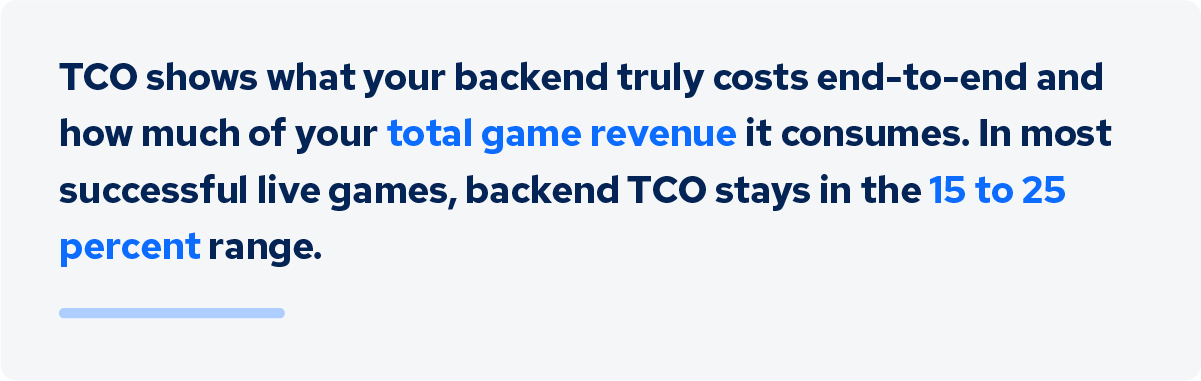
When it climbs into the 20-35% range, especially if feature velocity is slowing or ops demands are increasing, it’s a strong sign that the current setup may not be sustainable. Many studios underestimate TCO by 40-60% because they only track server bills.
Total Cost of Ownership (TCO)includes:
- People costs (50–65%) (engineering, infra, SRE, on‑call, incident response)
- Infrastructure (20–30%) (compute, storage, replication, CDNs, backups)
- Tooling (10–15%) (observability, CI/CD, security, testing environments)
- Compliance (5–10%) (audits, certifications, data regulations)
- One-time build costs (CapEx on months when systems were being built)
- Risk buffers (idle capacity, multi‑region support, DDoS protection)
Once you calculate TCO and express it as a percentage of revenue, it becomes much easier to see whether your backend is still in a sustainable range or if it’s time to move.
Other Signs Your Backend Is Hitting Its Limits
Not every slowdown or outage means you need a full migration, but there are some signals that your backend is starting to work against you:
- Your team is always firefighting: 25%+ time fixing issues, not shipping features
- Infra costs outpace growth: You're spending 2-3x more to support the same CCU
- Simple features feel heavy: Small updates require digging through legacy systems
- Ops and compliance steal time: Audits, launches, and data work slow everything
- Engineers burn out: On-call load and legacy maintenance make retention tough
If 2 or more of these show up at once, it’s a strong sign that your backend is hitting its limits and you should start thinking seriously about your long-term path forward.
The Three Paths to a Better Backend
If you’ve identified that your backend needs to change, here are three realistic paths you can take, each with different risks, costs, and timeframes.
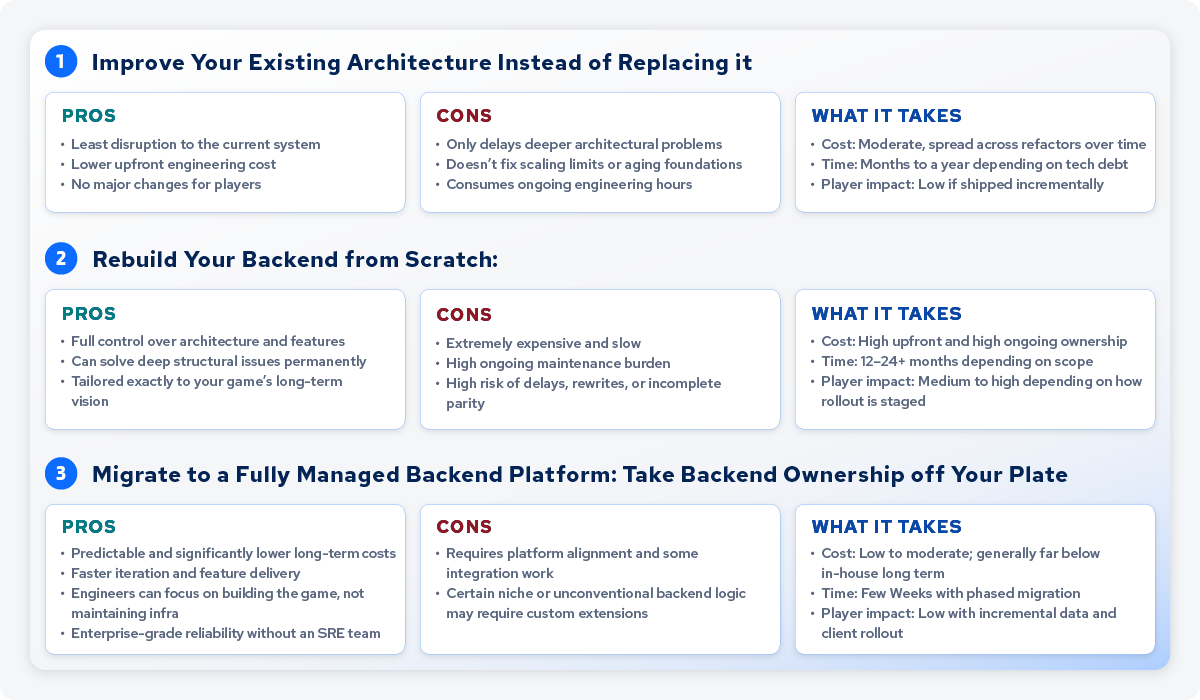
Most studios eventually find that fully managed backend platforms give them the best mix of lower costs, better reliability, and faster iteration.
Instead of building and maintaining everything yourself, these platforms take over the heavy operational work that usually drains backend teams, including infrastructure, live ops, compliance, region expansion and network protection. This removes a huge amount of overhead and lets your engineers stay focused on gameplay and content.
Among the managed options out there, AccelByte Gaming Services (AGS) stands out as it gives the best of both worlds: a complete backend you don’t have to run yourself, and full control when you need it.
- All the core backend services your game needs (identity, matchmaking, economies, servers etc)
- Full flexibility to override, modify, or extend default behavior using Extend
- Built-in observability and debugging tools so you don’t need to stitch together third-party stacks
You can run AGS in a shared cloud environment for free until you actually have players. This keeps early costs low and lets you team prototype, test, and even run early access builds without any overhead.
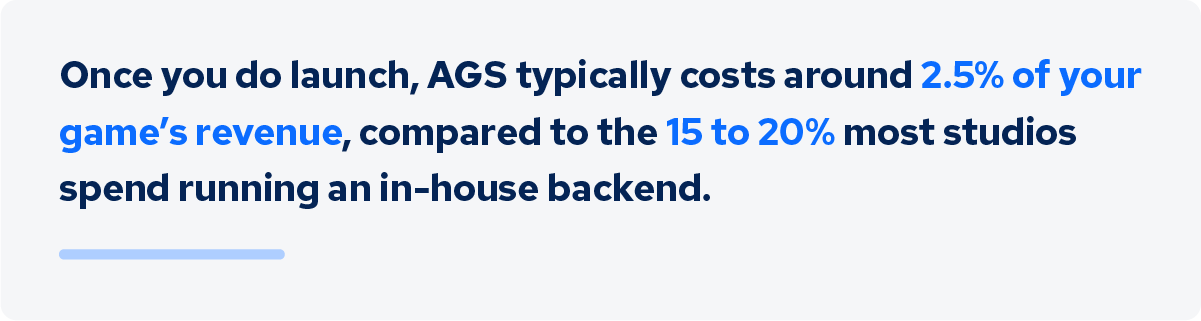
That mix of lower cost, flexibility, and visibility makes AGS a strong choice for teams that want a fully managed platform without giving up control.
The Migration Blueprint for Live Games
Successful migrations aren’t just technical lifts. They’re coordinated, cross‑team efforts that touch game play, backend, client, QA, and live ops. We’ve helped dozens of studios through real migrations, and the same core phases show up every time.
Here’s a simplified, dev‑friendly look at how migrations work and how we add value:
Phase 1: Custom Logic Assessment
|
How teams normally handle it:
|
Where AccelByte adds value:
|
Phase 2: Client Integration
|
How teams normally handle it:
|
Where AccelByte adds value:
|
Phase 3: Configuration Migration
|
How teams normally handle it:
|
Where AccelByte adds value:
|
-png.png)
Phase 4: Player Data Migration
How teams normally handle it:
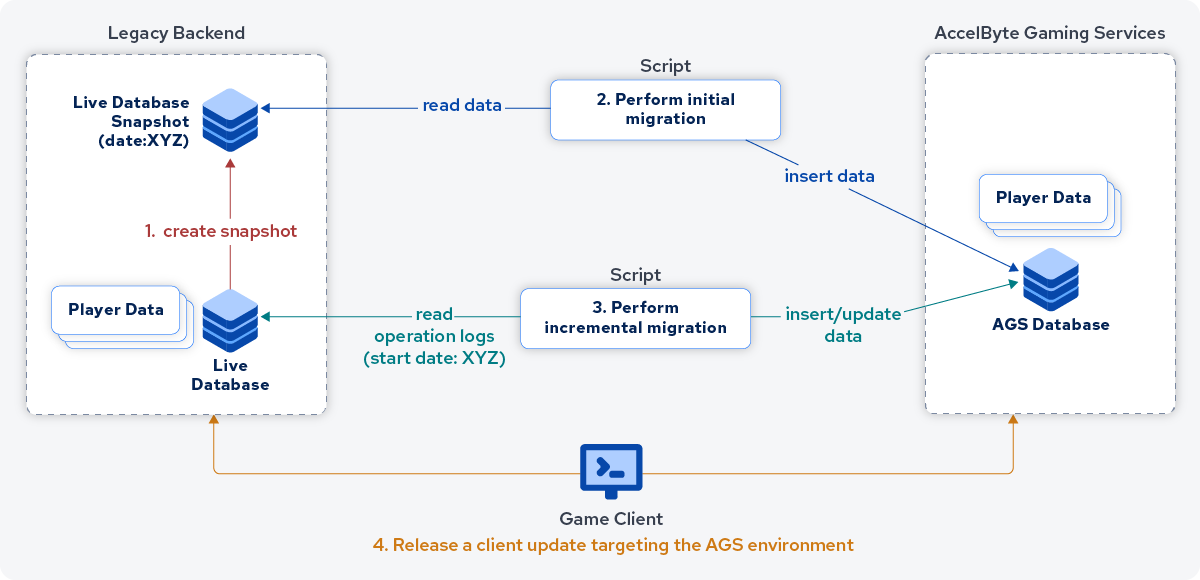
- Migrate accounts, inventories, entitlements, and social data
- Choose bulk vs incremental approaches
- Run integrity checks during the process
Where AccelByte adds value:
- Automated conversion into AGS data models
- Built‑in integrity checks before and after migration
- Support for both migration paths:
- Bulk for non‑live or simple titles
-png-1.png)
- Incremental for live games with zero downtime tolerance
Phase 5: Validation & Go‑Live
|
How teams normally handle it:
|
Where AccelByte adds value:
|
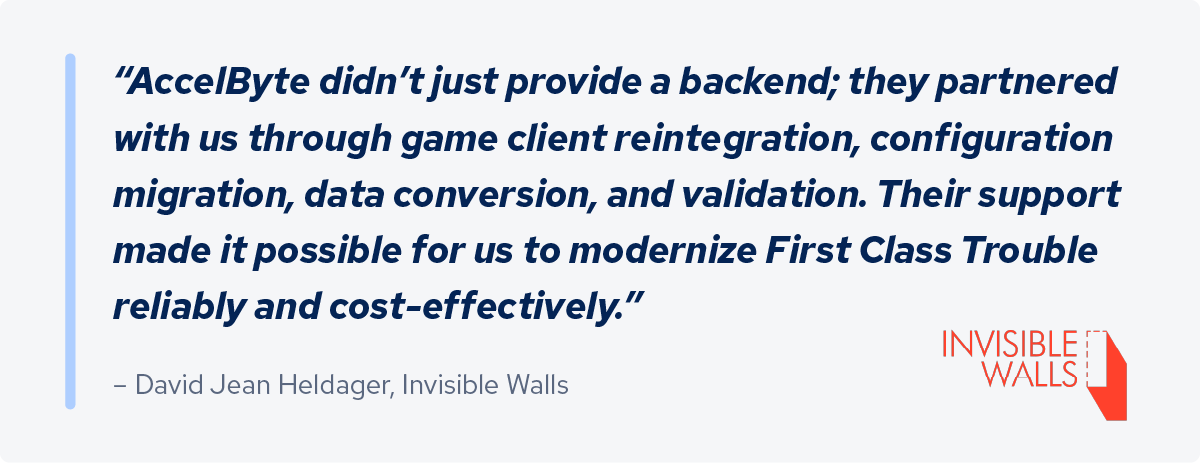
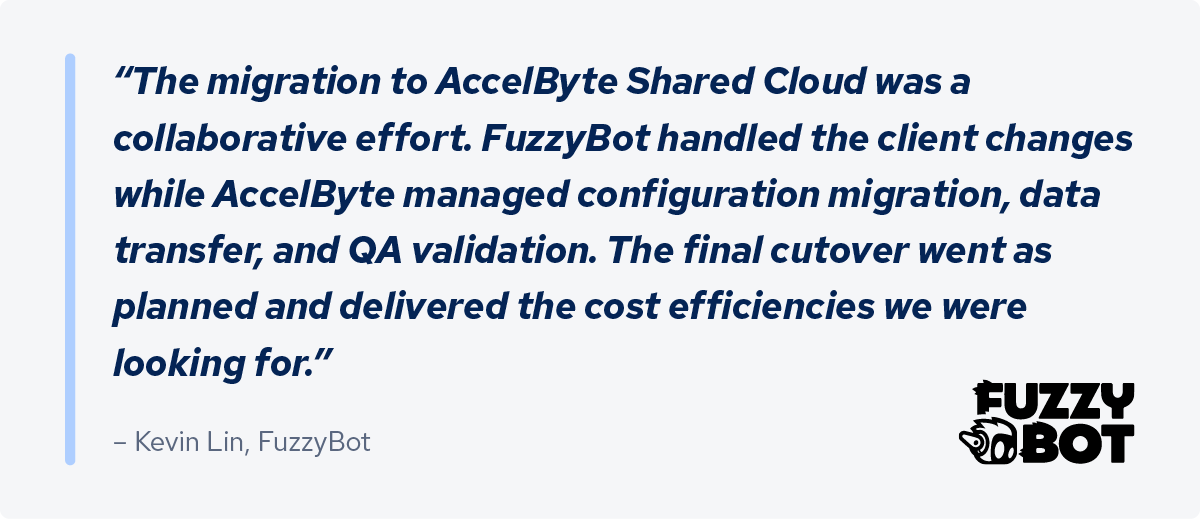
Even though every migration has its own quirks, the process gets a lot smoother when both teams work closely together. Here are two studios we’ve partnered with who shared their experience in their own words:
Common Pitfalls and How to Avoid Them
Even with a solid plan, backend migrations come with a few common traps that can slow teams down or cause headaches during cutover. Knowing these early makes the whole process a lot smoother.
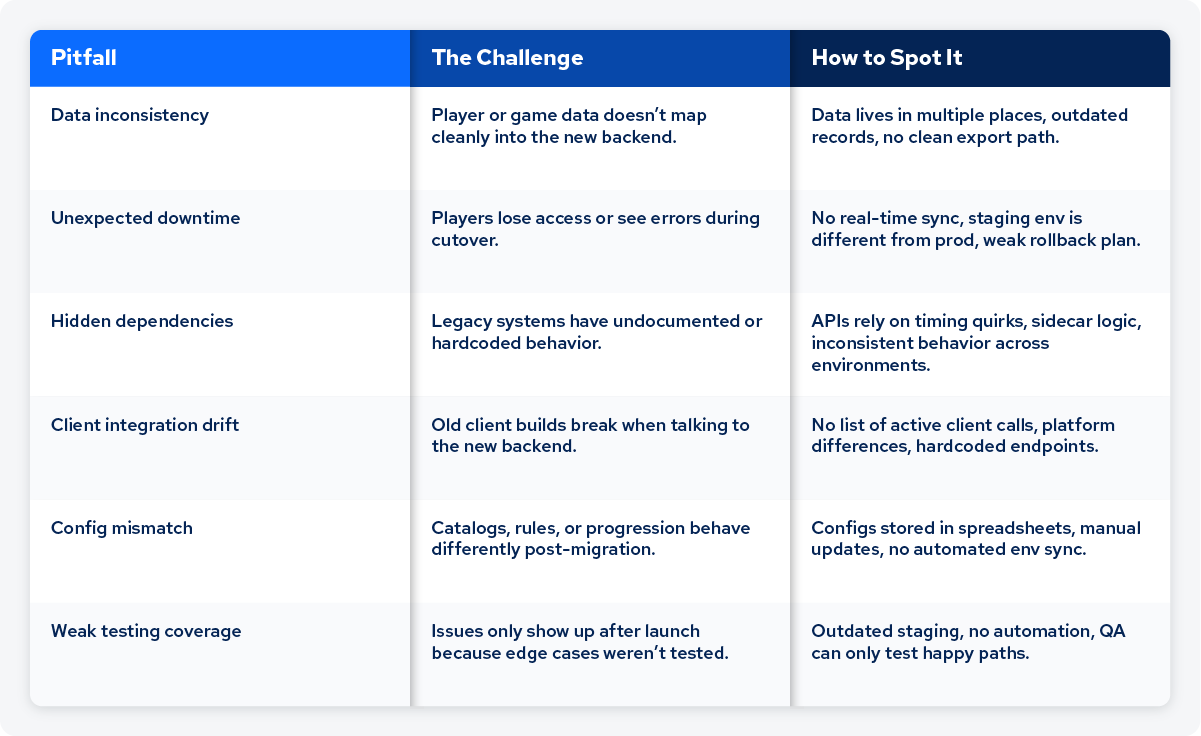
Spotting these early helps teams avoid last‑minute surprises and ship the migration with confidence.
Making the Decision
If your backend is slowing down development or inflating costs, now is the right time to explore your options. A conversation with our team can help you:
- Understand whether migration is truly the right move for your game
- Break down your TCO and identify where savings or efficiencies exist
- Explore how other studios approached migration and what they learned
- Map out what a phased, low‑risk migration plan could look like for you
Featured Blog Posts

Featured Customer Stories


Bring your first player online today.
Get started for free, and scale as your game grows.